It seems as if with every additional year that I intentionally try to follow God more closely, the more unknowns emerge and more unknowns are forecasted for my future.
When I first started this intentional walk with God through spiritual formation about 4-5 years ago, I thought I knew roughly how my life would turn out 4-5 years later. God has drastically, I mean DRASTICALLY flipped my plans upside down and shattered them. Where I would work. My income. Who and when I would marry. What my "part-time"/non-paid ministry would be like. How my relationship with God would existentially feel like on a day to day basis in relating to him. What kind of theological equipping I would be engaged in. What kind of role in the Great Commission I would have.
All flipped. All shattered.
God definitely has a way of turning our plans upside down. But I'm getting used to it. And it doesn't seem as unpleasant as it used to be.
And I realize that most biblical characters who walked close with God had to live a life full of unknowns with God where God guided them the next few steps of their journey and not the next mile. Abraham. Noah. Elijah. Moses. David. Peter. Paul. They lived lives full of unknowns when they intentionally tried to grow and remain close with God relationally. I'm sure a lot of the time these characters knew that they wouldn't be able to predict what major shifts in their lives would happen to them next year, let alone next month, let alone next week, and sometimes... even the next day. But, for the most part, they were okay with it. Or at least they learned to be okay with it (after respectfully yet sincerely flipping out and venting their off-guard emotions to God at times). This seems like part of the package in walking closely with God. It's either a good thing or bad thing depending on how one looks at it.
All I know is that right now, I have no idea who and when I'll marry. When/what kind of work I'm going to do (although I do have my God-given wishes, and I see more and more of how he's shaped me and is showing me more and more what my role in the Kingdom of God is). Where I'll live. What "part time"/non-paid ministry I would do. What area in the Kingdom of God I should proactively try to grow in. How my relationship with God will existentially feel on a day to day basis in the future. etc. Every time I try to predict/plan this stuff, God just ends up rearranging things.
I'm learning not only to accept the unknown, but to try to develop the attitude of learning to delight in it. God's the best storywriter afterall.
Sunday, June 30, 2013

Monday, June 17, 2013
Divine Copyright on Insightful Thoughts/Analogies
It happened again.
I gave my friend, who was preparing a sermon, what I thought was a great/insightful analogy in helping others understand an apparently spiritually confusing/complex idea in nice and simple everyday logic/concrete examples. I thought the idea was brilliant to be completely honest.
Then, when he was preaching the next day, there was an inner battle going on inside of me as soon as he started.
My spirit began to caution me: "Watch it. Don't desire your friend to mention you if he says the analogy you gave him yesterday in order to bring recognition to yourself in front of the congregation today. Careful now. Don't desire this."
My flesh rebelled immediately: "Oh, but I do hope that I do get recognized for this brilliant analogy if he does mention it! Then people will see how insightful my mind is to come up with these genius parallels with everyday life to understand seemingly complex spiritual things!"
My spirit: "No. Don't yearn for it. Stop. You are not to yearn for attention being brought to yourself. Glory goes to God alone. Stop wanting recognition."
My flesh: "But I want to be known. I came up with the analogy! It rightly belongs to me! If my friend says it, then I ought to be recognized! It's only proper! It's only fair to want brilliant new ideas given publicly to be identified with the person who came up with them! It's intellectual copyright! If my friend uses the analogy, it's my idea so he ought to give recognition to me because it's my thought!"
This huge battle was secretly going on inside of me for a while. Quietly, but intensely. The mysterious contradictions of the human heart on the road to sanctification.
Then.... suddenly... a God thought penetrated right in the middle of this battle in my heart.
"Chris, when I give your mind ideas/analogies to explain complex spiritual truths, do you remember to make sure to identify the idea with me? After all, I was the one who came up with these ideas and gave them to you, you're not the one who came up with them." - God
Ouch. Touche. Burn. Checkmate. Over. GG. No-question-repentance needed asap.
Oh, how I still have such a long way to go!
I gave my friend, who was preparing a sermon, what I thought was a great/insightful analogy in helping others understand an apparently spiritually confusing/complex idea in nice and simple everyday logic/concrete examples. I thought the idea was brilliant to be completely honest.
Then, when he was preaching the next day, there was an inner battle going on inside of me as soon as he started.
My spirit began to caution me: "Watch it. Don't desire your friend to mention you if he says the analogy you gave him yesterday in order to bring recognition to yourself in front of the congregation today. Careful now. Don't desire this."
My flesh rebelled immediately: "Oh, but I do hope that I do get recognized for this brilliant analogy if he does mention it! Then people will see how insightful my mind is to come up with these genius parallels with everyday life to understand seemingly complex spiritual things!"
My spirit: "No. Don't yearn for it. Stop. You are not to yearn for attention being brought to yourself. Glory goes to God alone. Stop wanting recognition."
My flesh: "But I want to be known. I came up with the analogy! It rightly belongs to me! If my friend says it, then I ought to be recognized! It's only proper! It's only fair to want brilliant new ideas given publicly to be identified with the person who came up with them! It's intellectual copyright! If my friend uses the analogy, it's my idea so he ought to give recognition to me because it's my thought!"
This huge battle was secretly going on inside of me for a while. Quietly, but intensely. The mysterious contradictions of the human heart on the road to sanctification.
Then.... suddenly... a God thought penetrated right in the middle of this battle in my heart.
"Chris, when I give your mind ideas/analogies to explain complex spiritual truths, do you remember to make sure to identify the idea with me? After all, I was the one who came up with these ideas and gave them to you, you're not the one who came up with them." - God
Ouch. Touche. Burn. Checkmate. Over. GG. No-question-repentance needed asap.
Oh, how I still have such a long way to go!
Sunday, June 2, 2013
Hot and Cold

It happened again. The Lord speaking to me through my complaints about other people. When he does this, I immediately shut up and repent about my attitude of complaining about other people's behaviour, when I realize all of a sudden that I've been exhibiting the exact same behaviour to God in my relationship with him.
(The following is an edited paraphrase of a non-verbal dialogue I was having with God in the shower tonight. Me and God don't always use words when we talk about things on our hearts, but for reflection's sake, it becomes clearer to myself when I try to put it into words and get more clarity from reflecting the conversation off a verbal mirror)
"God, I don't like the fact that I'm on the receiving end of "hot and cold" from this person. It's really not enjoyable. Although it's enjoyable when its hot, it's really not enjoyable when things get cold again. Repeatedly. I'd rather this person not be "hot and cold", but just remain cold if this person doesn't want to remain consistently "hot" to me. It's not pleasant. I'd really prefer receiving nothing over this kind of vascillation."
"Chris, how often are you "hot and cold" to me? I'd rather you either remain "hot" towards me all the time, rather than you vascillate being "hot and cold" to me during certain days/hours. It's not enjoyable to be on the receiving end of this kind of vascillation." (God said this to me in a gentle/loving tone.)
Ouch. At that moment, not only my face had fresh water splashing on it, but so did my spirit.
How often am I "hot and cold" towards God throughout my day? Certain hours, I can be "hot" towards God in terms of how much I like him, treasure him, want to be with him, get to know him, love him, seek him with all my heart, and simply "chill" with him without any "agenda". Then other hours of the day, I get "cold" towards him. Not hateful towards him, but just "cold". It's not that I abandon my faith, or do blatantly/intrinsically sinful things (at least all the time), but I seek to find my hope, joy, treasure, emotions, and satisfaction in other neutral things, like computer games, following pro sports, reading, my relationships with others, social networking, socializing with others, and other things. These things aren't bad in and of themselves, but they can easily distract me from all out consistent white-hot obsessive seeking/desire towards concrete/street-level interactive relationship with God. There is a part of me that wants quick pleasure/fun sometimes. But there is a greater part of me that really desires God to no-nonsensely be my best friend. I desire to be in a state where I can truly say that I sense closer intimacy with God than with my best human friend (Bobby) in this season in my life.
One of the things that stuck out to me as I did some listening prayer with other brothers and sisters in the faith yesterday was that God told me something along the lines of "when you're serious with me, I'll get serious with you." Ouch. It resonated with my spirit immediately. I thought I was somewhat serious with God already. I thought those were the kind of things I ought to tell other Christians yearning and desiring to experience more/deeper intimacy with God themselves. I needed that gentle exhortation/rebuke/encouragement myself.
Sorry Lord, for these double standards of mine. Forgive me for being hot and cold to you throughout the day. I want to be hot towards you every hour.
Hot and cold is not cool. Double entendre intended.
Sunday, May 19, 2013
The Kingdom Triangle

A few years ago, I read a book called "Kingdom Triangle" by J.P. Moreland that has profoundly framed how I have studied, understood, and sought to live and experience the Kingdom of God.
I really, really like the author, J.P. Moreland. He, in my estimation, is one of the most balanced Evangelical writers/thinkers out there who not only write about what the Kingdom of God is like but experience it too. Because seriously, who cares if you can write something brilliant about the Trinity if you never experience your Trinitarian theology. Ever. I read somewhere that before the Protestant Reformation, there was, for the most part, no disconnect between a theologian's theology and his/her experience. With some exceptions, Christian thinkers actually experienced their theological reflections about God. Not exhaustively. But considerably. Moreland does this. And this is one of the reasons why I really like him.
A note about balance. Most people think they're balanced. But most people actually are pretty imbalanced (all of us are imbalanced in some way, because there's no person out there who is totally free from imbalance). The thing is, that most imbalanced people don't realize they're imbalanced. Because in their minds the only continuum that exists in the Christian life (i.e. Word-centered [i.e. Reformed] vs. Spirit-centered [i.e. Pentecostal/Charismatic]) only represent 2 streams of thought out of other streams that are included in the historical Christian faith. They are oblivious to other streams that are out there as well. Some other people of the Kingdom of God are compassionate-ministry/social-justice oriented and/or spiritual formation oriented (which I would argue is connected yet distinct from being "Word centered [in a Reformed understanding]" or "Spirit-centered" [in a Charismatic understanding]). As a parenthetical statement, I personally think that the compassionate-ministry/social-justice stream and the spiritual formation stream can be clumped together, although they're not 100% identical.
Let us take an example of this. Look at the well-known passage of Hebrews 4:12: For the word of God is living and active. Sharper than any double-edged sword, it penetrates even to diving soul and spirit, joints and marrow; it judges the thoughts and attitudes of the heart. Different Christian traditions may have different, yet valid attitudes as of how they "live out" this truth.
"Word-centered Christians" ,with respect to generalizations, may read this verse and be encouraged to focus on the intellectual study of the word, getting your doctrine right, and engaging in lots of exegesis and hermeneutics to study the intellectual meaning of biblical passages to "extract its power".
"Charismatic Christians", with respect to generalizations, may read this verse and be encouraged to focus on the "Charismatic reading" of biblical passages, in terms of how the Holy Spirit divinely electrifies passages when he speaks bible verses prophetically through his people to pronounce people's prophetic destinies, engage in spiritual warfare, and have people supernaturally "cut to the heart" with the Word of God.
You see, someone who has knowledge of these 2 streams and gleans from both of them may consider themselves "balanced", yet neglect other stream(s) of the Kingdom of God. Spiritual Formation, within recent years, has started to become more well known in Evangelicalism, which is good in my opinion. Because until then, most of us have had no idea what this spiritual formation stream of the Kingdom of God is all about, and hence would be stuck in a 2-dimensional continuum of measuring how "balanced" we are.
"Spiritual Formation Christians", with respect to generalizations, may read Hebrews 4:12 and be encouraged to use different contemplative methods of meditating on the scripture throughout one's day. Not for blatantly supernatural effects, or to intellectually study the scriptures, but just to have the content of the verses soak into one's being and permeate different aspects of one's self (thoughts, feelings, will, body, and social relationships). There are levels of permeation that one's heart/spirit can experience as one persists with creative experimentation in meditating on the Scriptures. Some effects come after months of persisting with the spiritual discipline of contemplative meditation on passages. Some effects only come after years of persisting. Some only after decades. This comes through 1 Corinthians 9:24-27 style spiritual discipline. It is distinct from the "Word-centered/Exegetical-Hermeneutical" stream and the "Spirit-centered/Charismatic" stream.
It is interesting to note that people from their own streams tend to have their own take on what it means to "disciple others" and "follow Christ". Christians from all 3 streams read and quote from the same Bible to back up their framing/understanding of "discipleship to Jesus", whether it's knowing the Scriptures more and more the way Jesus knew them and had his mind shaped by them, or working and moving in the Holy Spirit to do the supernatural works that Jesus did through the Holy Spirit, or growing in Christlike character in the way one reacts when others sin against them.. And their different views may all be valid, but still have blindspots.
Back to Moreland. This guy is balanced. He not only thinks he's balanced, he actually is. And he experiences the stuff he talks about too.
So in his book, he writes about 3 points of the Kingdom that the Early Church was big on that caused the Church to grow like mad. They are:
1)Having a sharp Christian mind and worldview to outthink the Church's critics
2)Spiritual Formation. Growing in the character of Christ through persistent-longterm-yet-non-legalistic spiritual disciplines of practically abiding in Christ moment to moment in one's first-person consciousness to allow the Fruit of the Spirit to grow one's character. In short, the science of allowing the Fruit of the Spirit to grow in oneself.
3)Charismatic signs, wonders, and miracles of the Holy Spirit. The growing and effective use of the supernatural gifts of the Holy Spirit.
The thing about Moreland, is that he has such a balanced and varied background that qualifies him, I think, to write on all 3 topics. He has a PhD in Philosophy and was a professional apologist who debated world-class atheists in public settings/universities to defend the Christian faith on intellectual grounds (I think he may still do this). He has done his fair share of reading the spiritual devotional classics in the spiritual formation stream of the Christian faith and has experienced practicing what he reads to have his soul/character formed in Christlikeness significantly over a patient process of persistent New Testament style spiritual disciplines. And, within the past decade or so, he has started to explore Charismatic spirituality, such as prophecy, healing, and casting out demons. Basically the stuff you see in the book of Acts. Now this guy is truly balanced.
He writes about all 3 points of the triangle, and how we need to have elements of all 3 of the Kingdom of God to see revival in our North American churches. I am completely sold on this.
To me, these 3 points of the triangle are like the study of the 3 sciences in the physical realm. You have physics, chemistry, and biology. All are connected to each other, yet distinct. Just because one has an undergrad in physics, does not mean that one has an undergraduate level of understanding of chemistry. Just because one has a masters degree in chemistry, does not mean that one has a Masters level of understanding for biology. And just because one has a PhD in biology does not mean that one has a PhD level of understanding, or even a Masters or undergraduate level of understanding in physics. They are connected, yet distinct from each other. And all 3 streams of the physical sciences need to be capitalized on to have the maximum amount of cutting-edge technological developments in the physical world.

The same goes with these 3 points of the Kingdom Triangle. They are connected to each other, yet distinct. This is the sad, yet important part. Proficiency in one does not translate into proficiency in the other 2 points of the triangle. Just because one has a Doctorate in theology or philosophical theology like Wayne Grudem or William Lane Craig does not mean that one can concretely cast out demons who are harassing a tormented human. And just because one has experience and proficiency in casting out different types of demons like Charles Kraft does does not mean that one has the Christlike character/Fruit of the Spirit like Dallas Willard. And just because one has abundant Fruit of the Spirit/Christlikeness in them does not mean that one has the cultivated Christian worldview/mind to logically and rationally explain why Christianity is a more coherent and intellectually credible worldview than secular atheism.
To my understanding, these 3 points of the triangle actually combat different dimensions in how Satan tries to attack the Church/Christians, including our Western culture. The world, direct/blatant/explicit attacks from demons, and the flesh.
First of all, you have "the world", which includes the world of ideas, and what is publicly taught in secular universities. In order to engage the world in its own mother culture, one has to know the ideas that are circulating and dominating the minds of the people in it, and logically show how those ideas are either destructive and/or false and/or unwise, without just anti-intellectually "preaching at people". It is possible to use logic, science, history, and reflected experience to show how certain ideas are intellectually superior to others. For the Christian, this means that logic, science, history, and reflected experience can demonstrate and defend the intellectual credibility of the Christian worldview.
Then, you have Satan himself, as well as his demons. 'Nuff said. These guys have to be dealt with head on. And they don't bow down to doctrinate statements and systematic theology. They bow down to borrowed spiritual authority given from the Father in Jesus' name. But this has to grow. This has to be developed. It's not like Harry Potter where you say the name of Jesus and treat it like a spell and everything's solved. It's a strength and authority that needs to be cultivated/seasoned/grown and exercised responsibly to deal with different types of demons in spiritual warfare as one grows in spiritual authority as one grows in relational intimacy with Jesus to walk in the power that he walked with when he was on earth.
And then you have "the flesh", which are the sinful habits ingrained in our fallen human nature that need to be dealt with through Spirit-assisted spiritual discipline. These are evil things "within a person" as opposed to demons who are "out there". Peter was able to cast out demons with the other disciples after Jesus granted them authority to do so. But he denied Jesus 3 times afterwards. The problem was not that he didn't have authority to cast out demons. The problem was that his thought patterns, emotional programming, volitional decision making habits, bodily conditioning, and social relational structures were tainted and twisted by sin, and needed to be "unwrenched and straightened into righteousness" through spiritual disciplines, such as fasting, praying, meditation on the word of God, silence, solitude, etc. That is why he wrote 2 Peter 1:5-7. Jesus himself never had any demons inside of him to be casted out, yet he still had to "learn obedience through suffering" (Hebrews 5:8). There is a "science" to grow in Christlikeness. It is an elaborate process with overall patterns, although there is a lot of mystery to it at the same time.
With all this being said, proficiency in one stream/point does not make one automatically proficient in other one(s). It is sad to see so many Christians and also Christian leaders only have proficiency/maturity in one stream without the other(s) and be satisfied with their current condition of development/growth. It is even more sad to see that because they have developed proficiency/maturity in one area, that they lose their "teachableness" to learn in other areas. Being teachable is one of, if not THE most important trait to have in order to grow. The moment one lacks teachableness, one stops growing. One needs it as a pre-condition for many things. To be able to humbly ask for help. To be able to proactively ask a more experienced person to train you in an area you need growth in. To be willing to learn from one's mistakes. To be willing to not care about looking like a fool, even as an adult. To proactively study and milk the knowledge from trusted resources when no one else is pushing/encouraging one to do so.
"Listen to advice and accept discipline, and at the end you will be counted among the wise." - Proverbs 19:20
I had to be proactive and teachable, and still try to remain proactive and teachable as I am slowly yet gradually growing in all 3 areas/streams. The way God's grace usually works is in partnership with a proactive and teachable learner. I find that the most proactive and teachable people in life learn, grow, and develop the most.
In my university years, starting from 2003 and being introduced to Ravi Zacharias, I started to intentionally and proactively develop my Christian mind/worldview to know why what I believe is objectively true (hopefully without having an arrogant attitude, just like being confident that 2+2=4 without thinking that one is better than those who think that 2+2=5). I read the right books, listened to talks from people who knew their stuff, and milked trained apologists when I could. God grew my Christian mind a lot through that.
In my missionary years in East Asia, starting from 2008, while I was being brought to my lowest spiritual point in my journey, I had to go to the treasure chest of devotional spiritual classics in spiritual formation that were written by people who had PhDs in Christlikeness over the centuries. I had to be teachable. I read a lot. I experimented a lot with spiritual practices. I persevered, sometimes for months, even when I didn't immediately see any fruit to it. I listened to talks by contemporary people who had PhDs in Christlikeness. I milked the right people who were Christlike from their lifestyle of intentional spiritual formation (and still do). God has grown my character in me by me accessing his grace through proactivity and teachability on my part.
Then, starting at the end of 2010/beginning of 2011, by the grace of God I got exposed to legit Charismatic Christian spirituality. Growing up Baptist, I got zero exposure to this stuff. Prophetic dreams. Visions while one is awake. Dealing with demons when you feel the physical effects of them attacking you. The gift of prophecy exercised by someone affirming what the deepest levels of your heart feels spiritually without you telling them anything, immediate physical healings, literal miracles. Once again, I had to be teachable, because I had zero exposure to this stuff in my faith tradition. I had to find trusted resources and read up a lot on it, listen to talks on it, and experiment with this stuff in safe settings, and also milk those who are wise, seasoned, and experienced in this stuff. Although I still have eons to go to be able to deal with demons the way Charles Kraft does and/or listen to and discern God's voice the way Jack Deere does, God has grown me a lot in this area, through his grace meeting my proactivity and teachability on my part.
It is hard to find balanced people, who are balanced in all 3 areas. I know a lot of Christians who are strong in 1 or 2 streams/points of the triangle. I know very few who are are mature/developed in all 3 though. My hope is to see a whole generation of young Christians who are truly balanced and cultivated/seasoned/mature in all 3 points of the triangle. Then things will be ripe for a trans-emotional spiritual revival here in North America.
Sunday, April 21, 2013
Radical Hebrews 11:33-34 Faith
"Expect great things from God. Attempt great things for God."
- William Carey
"A Christian leader of the early twentieth century, R.A. Torrey, decided - at what he understood to be God's direction - to have no salary or regular means of support as a way of coming to know the reality of God's day-to-day provision. He thereafter took no offerings in his meetings and spoke to no human beings about his needs. He lived a public life seen by all, and he reported that day after day, week after week, month after month, year after year, he 'walked up to that aperture in Heaven which men call 'prayer'' and asked God for what he needed. It was supplied. The needs of his family and his ministry were more than fully met. He went out of his way to insist that this was not something that every Christian should do, but something he chose to do to verify the present reality of God in his life."
-Dallas Willard the Great in "Knowing Christ Today"
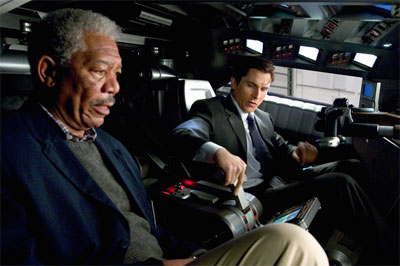
*Lucius Fox = R.A. Torrey's hypothetical spiritual director/guide who would supply godly wisdom/spiritual technology to help him accomplish his assigned missions from God that required radical Hebrews 11:33-34-mountaing-moving faith.
Bruce Wayne = R.A. Torrey the Dark Knight Christian who expected and attempted great things from God for God.*
Lucius: "Now for high-risk faith jumps like trusting in God to to supply your financial needs without taking in a salary, you're going to need special prayer and fasting. Well, I must say, compared to your usual prayer requests, trusting in God for this is pretty straight forward."
R.A. Torrey: "Now what about relying on God to provide for my financial needs week by week, without planning or saving in advance?"
Lucius: "I'd recommend a good fundraising agent"
R.A. Torrey: "Without telling anyone."
Lucius: *pauses and smirks* "Now that's more like it Mr. Torrey"
It is the role of the Dark Knight Christian to do all the preparation work with godly wisdom, special prayer, and spiritual discernment to receive God's miraculous providence. After all is done on the side of human responsibility in carrying out the mission, the Dark Knight Christian lastly has to launch one's prayers to the heavens, then expect and trust in the perfect timing of God's providence from the heavens to deliver him, just as Batman, after he has done his part of the mission, lastly has to launch his balloon-gadget to the sky, then expect and trust in the perfect timing of the plane from the sky to deliver him.
- William Carey
"A Christian leader of the early twentieth century, R.A. Torrey, decided - at what he understood to be God's direction - to have no salary or regular means of support as a way of coming to know the reality of God's day-to-day provision. He thereafter took no offerings in his meetings and spoke to no human beings about his needs. He lived a public life seen by all, and he reported that day after day, week after week, month after month, year after year, he 'walked up to that aperture in Heaven which men call 'prayer'' and asked God for what he needed. It was supplied. The needs of his family and his ministry were more than fully met. He went out of his way to insist that this was not something that every Christian should do, but something he chose to do to verify the present reality of God in his life."
-Dallas Willard the Great in "Knowing Christ Today"
*Lucius Fox = R.A. Torrey's hypothetical spiritual director/guide who would supply godly wisdom/spiritual technology to help him accomplish his assigned missions from God that required radical Hebrews 11:33-34-mountaing-moving faith.
Bruce Wayne = R.A. Torrey the Dark Knight Christian who expected and attempted great things from God for God.*
Lucius: "Now for high-risk faith jumps like trusting in God to to supply your financial needs without taking in a salary, you're going to need special prayer and fasting. Well, I must say, compared to your usual prayer requests, trusting in God for this is pretty straight forward."
R.A. Torrey: "Now what about relying on God to provide for my financial needs week by week, without planning or saving in advance?"
Lucius: "I'd recommend a good fundraising agent"
R.A. Torrey: "Without telling anyone."
Lucius: *pauses and smirks* "Now that's more like it Mr. Torrey"
It is the role of the Dark Knight Christian to do all the preparation work with godly wisdom, special prayer, and spiritual discernment to receive God's miraculous providence. After all is done on the side of human responsibility in carrying out the mission, the Dark Knight Christian lastly has to launch one's prayers to the heavens, then expect and trust in the perfect timing of God's providence from the heavens to deliver him, just as Batman, after he has done his part of the mission, lastly has to launch his balloon-gadget to the sky, then expect and trust in the perfect timing of the plane from the sky to deliver him.
Monday, April 8, 2013
Thursday, February 28, 2013
The wisdom of the Eastern Orthodox Christian Fathers
Kudos to the Western Christians who are open to equipping themselves with the spiritual tools and wisdom of the spiritual walk from Christian faith traditions outside Protestantism. Including the Eastern Orthodox faith tradition.
*An emerging innovative Western soldier of Christ seeking to equip himself with depth of spiritual wisdom, understanding (Colossians 1:9), and depth of insight (Philippians 1:9) talks his professor of church history and spiritual formation while in his "armoury" aka personal library of godly wisdom stored up throughout the ages of Church history*
Western soldier of Christ sees a book with the spine entitled 'The Way of a Pilgrim'. Says: "What's that?"
Professor: "Oh, 'The Way of a Pilgrim'? Oh, you wouldn't be interested in that"
*Western soldier of Christ takes it off the bookshelf and starts to flip through it and meditate on some excerpts*

Professor: "This book contains an account of an anonymous pilgrim in the 19th century who went on a journey to learn how to pray without ceasing according to an Eastern Orthodox book on prayer called The Philokalia. The Philokalia is the full and detailed science of constant, unceasing interior prayer, set forth by twenty-five Eastern Orthodox Christian holy Fathers. It's content contains centuries of accumulated first-hand wisdom in how to attain unceasing prayer"
(some quotes from the book)
But what is prayer? And how does one learn to pray? Upon these questions, primary and essential as they are, one very rarely gets any precise enlightenment from present-day preachers. For these questions are more difficult to understand than all their arguments that I have just spoken of, and require mystical knowledge, not simply the learning of the schools. And the most deplorable thing of all is that the vain wisdom of the world compels them to apply the human standard to the divine. Many people reason quite the wrong way round about prayer, thinking that good actions and all sorts of preliminary measures render us capable of prayer. But quite the reverse is the case, it is prayer which bears fruit in good works and all the virtues. Those who reason so, take, incorrectly, the fruits and the results of prayer for the means of attaining it, and this is to depreciate the power of prayer - pg. 7
The continuous interior Prayer of Jesus is a constant uninterrupted calling upon the divine Name of Jesus with the lips, in the spirit, in the heart; while forming a mental picture of His constant presence, and imploring His grace, during every occupation, at all times, in all places, even during sleep. The appeal is couched in these terms, 'Lord Jesus Christ, have mercy on me.' One who accustoms himself to this appeal experiences as a result so deep a consolation and so great a need to offer the prayer always, that he can no longer live without it, and it will continue to voice itself within him of its own accord. - pg. 8-9
"Is [the Philokalia] more sublime and holy than the Bible?" I asked.
"No, it is not that. But it contains clear explanations of what the Bible holds in secret and which cannot be easily grasped by our short-sighted understanding. I will give you an illustration. The sun is the greatest, and the most resplendent and the most wonderful of heavenly luminaries, but you cannot contemplate and examine it simply with unprotected eyes. You have to use a piece of artificial glass which is many millions of times smaller and darker than the sun. But through this little piece of glass you can examine the magnificent monarch of stars, deilght in it, and endure its fiery rays. Holy Scripture also is a dazzling sun, and this book, the Philokalia, is the piece of glass which we use to enable us to contemplate the sun in its imperial splendour. - pg. 9-10
Sit down alone and in silence. Lower your head, shut your eyes, breathe out gently and imagine yourself looking into your own heart. Carry your mind, i.e., your thoughts, from your head to your heart. As you breathe out, say 'Lord Jesus Christ, have mercy on me.' say it moving your lips gently, or simply say it in your mind. Try to put all other thoughts aside. Be calm, be patient, and repeat the process very frequently. - St. Simeon the New Theologian (pg. 10)
The faculty of pronouncing words lies in the throat. Reject all other thoughts (you can do this if you will) and allow that faculty to repeat only the following words constantly, "Lord Jesus Christ, have mercy on me." Compel yourself to do it always. If you succeed for a time, then without a doubt your heart also will open to prayer. We know it from experience. - Nicephorus (pg. 12)
in my lonely hut I said the Prayer of Jesus six thousand times a day for a whole week. I felt no anxiety. Taking no notice of any other thoughts however much they assailed me, I had but one object, i.e., to carry out my starets' bidding exactly. And what happened? I grew so used to my Prayer that when I stopped for a single moment, I felt, so to speak, as though something were missing, as though I had lost something. The very moment I started the Prayer again, it went on easily and joyously. - pg. 13
My whole desire was fixed upon one thing only - to say the Prayer of jesus, and as soon as I went on with it I was filled with joy and relief. It was as though my lips and my tongue pronounced the words entirely of themselves without any urging from me. I spent the whole day in a state of the greatest contentment. I felt as though I was cut off from everything else. I lived as though in another world, and I easily finished my twelve thousand prayers by the early evening. - pg. 14-15
that is how I go about now, and ceaselessly repeat the Prayer of Jesus, which is more precious and sweet to me than anything in the world. At times I do as much as forty-three or four miles a day, and do not feel that I am walking at all. I am aware only of the fact that I am saying my Prayer. When the bitter cold pierces me, I begin to say my Prayer more earnestly and I quickly get warm all over. When hunger begins to overcome me, I call more often on the Name of Jesus and I forget my wish for food. When I fall ill and get rheumatism in my back and legs, I fix my thoughts on the prayer and do not notice the pain. If anyone harms me I have only to think, "how sweet is the prayer of Jesus!" and the injury and the anger alike pass away and I forget it all. I have become a sort of half-conscious person. I have no cares and no interests. The fussy business of the world I would not give a glance to. The one thing I wish for is to be alone, and all by myself to pray, to pray without ceasing; and doing this, I am filled with joy. - pg. 18

*Western soldier of Christ closes book, and looks at the professor*
Western soldier of Christ: "Does it come in Protestant theology?"
Thursday, February 7, 2013

Sunday, January 20, 2013
Why the Batman Trilogy speaks deeply to my heart

There's a reason why Christopher Nolan's Batman Trilogy has deeply spoken, and still deeply speaks to me in my spiritual journey. Certain clips resonate very deeply with my heart in my faith journey with God. They still do. On average, I watch one of my favourite scenes in the trilogy once a week. Still.
The interesting thing is, though, that these Batman movies only started to become my favourite movies in the fall of 2009 (Batman Begins and The Dark Knight that is, because The Dark Knight Rises didn't come out yet). This means that it was over 4 years after I saw Batman Begins when it came out in 2005 and over a year after I saw The Dark Knight on its opening weekend in the summer of 2008 until they became really dear to my heart. I did enjoy the movies when I saw them at first, but they were just entertainment to me back then. Just that. However, when I started to go through severe spiritual trials in the fall of 2009, I started seeking for comfort, inspiration, hope, and companions to walk with me on the hard path of spiritual testing and character molding that comes when one intentionally and proactively goes deeper in the Jesus life. I found it hard to get that stuff. But... strangely... I got it when I watched these Batman movies again. They offered comfort, inspiration, and hope. Also, Bruce Wayne, although he was only a fictional character, proved to be a strangely comforting companion along the way. The first time I watched Batman Begins and The Dark Knight, I was watching Bruce Wayne from "the outside in". When I watched Bruce Wayne again in the fall of 2009, I was no longer experiencing Bruce Wayne's story from the outside, but "from his inside". I identified so much with his journey. The highs, the lows, the victories, the defeats, the encouragements, the discouragements, the times of wanting to give up, the times where a meaningful pursuit that transcends one's own egotistical agenda motivated him to persevere in suffering for a good cause (saving millions of lives). Then, I found myself just watching my favourite clips over and over again. Not for the purpose of being entertained over and over again. But because I deeply identified with him. They helped sustain me.
They still do.
I don't fully know why these movies have such a rich effect on my spirit. However, I have pinpointed some themes that I think speak deeply to the mysterious chambers of my inner heart.
Here they are:
1. The theme of being an a journey, especially one that is self-initiated from stepping voluntarily out of one's comfort zone.
Bruce Wayne was a billionaire. He could have lived a very comfortable/sheltered life if he really wanted to. But there was a longing in him that he chose not to ignore. A longing to fulfill a purpose much deeper than mere self-fulfillment. A longing that, if listened to, would not allow him to be okay with the status quo of his corrupted city (Gotham). He actually left his billionaire mansion, left North America, and went to the East to try to find some answers to this longing in his heart. For Bruce, leaving Gotham to grow and search for something deeper is a 21st-century equivalent of leaving "The Shire" of "Middle Earth". He voluntarily chose to get out of the McDonald's PlayPlace of North America and experience the world. He went to the East. He got hard training that was very uncomfortable. But it was worth it. No one forced him to, but he chose to do it on his own. Granted his purpose, "to fight injustice" is different from a North American Christian's purpose, but the notion of getting out of the sheltered McDonald's Play Place to search for something deeper is a common theme.
Likewise, I have been on a journey, ever since 2009. Although I was physically on a journey, when I travelled to the East to live there for a time to serve God, I also was on a spiritual journey within. I was seeking the real, I mean REAL Jesus life. I got exposed to the writings of earnest Jesus followers of the past who wrote about their first hand experiences of no-nonsensely living in the Kingdom of God on a day to day basis. Without being prideful, they joyfully wrote of the spiritual condition they attained through grace-enabled discipline in walking with God within this lifetime. They wrote about things such as:
-being aware of God's companionship presence every single minute literally as one went about doing various tasks (reading, writing, socializing, working, physical activity etc.)
-really, i mean REALLY experiencing a lot more deeper intimacy with God than with one's best friends/spouse/family members on a consistent moment-to-moment basis
-not worrying about anything. ever.
-being completely free from any human's opinions. really.
-living in a way where the output of one's work is greater than the input of human effort involved in multiple areas (working, playing sports, socializing, caring for the hurt etc.) due to God's presence with the person
-having an inexpressible and mysterious joy that undergirds all the sufferings in this life
And much, much more. I wanted this stuff. I saw that it was available to the Jesus follower, fully in this lifetime. Or at least was supposed to. Yet the teachings of modern day Protestant spirituality were, for the most part, lacking the no-nonsense means of how to get there in this lifetime. I wanted more than just "comfortable cultural Christianity". I wanted the real deal, the stuff that serious Jesus followers over the centuries have consistently experienced.
So, spiritually, I left the "spiritual McDonald's Play Place" of North American Christian spirituality due to its emptiness and failure to lead one to experience the Jesus life. And I journeyed. With the help of medieval Catholic devotional writers, Eastern Orthodox writers, and some rare Evangelical voices (i.e. Dallas Willard and Jan Johnson), it was and has been a meaningful journey. But since it involved and still involves getting out of one's comfort zone, it was and still is hard. But I know that the destination is well worth it. So during the hard times in this journey, I somehow identify with Bruce Wayne's hard times in his journey.
Man, it is such a journey.
2. The theme of equipping oneself with wisdom
Bruce Wayne uses wisdom to develop his own tools for combat. Science is his ally, and not his enemy. He develops customized gadgets and technology to help him accomplish his objectives. Batman knows that good intentions are not enough. One must have effective means to accomplish one's mission.
In the same way, I have discovered helpful spiritual tools along the way in the Jesus life journey. If technology = tools, then I have discovered all kinds of juicy spiritual technology in my journey to fight in spiritual warfare littered along the path of the deeper Jesus life. While I do recognize that there is a risk of idolizing spiritual technology, I do think that there is a role for them in the spiritual journey. Proverbs talks about the accumulation of wisdom, and how wisdom helps one in one's journey.
Some of my favourite "spiritual technology gadgets" that I have come across are:
-dream interpretation (to diagnose spiritual problems and find out the root causes of things)
-the "focusing" method in the psychology/counselling discipline (www.focusing.org)
-the Jesus prayer (http://www.orthodoxprayer.org/Jesus%20Prayer.html)
-Ignatian imaginative meditation (http://www.ignatianspirituality.com/ignatian-prayer/the-spiritual-exercises/ignatian-contemplation-imaginative-prayer/)
-a semi-Quakerish "centering" activity
-"charismatically" listening to the voice of God
A sub-theme of this theme is how Bruce Wayne tailors the the use of technology that he develops to fit his own customized style. Even his own fighting style is a mix of different martial arts styles that he has fused together.
In the same way, I have learned to customize these time-tested methods that many saints in the past have used throughout the centuries of Church history to become more like Christ (these methods don't have anything magical in and of themselves, but they become conduits/pipes for the Holy Spirit to work through). Like Bruce, I have and am still tailoring them to fit my personality, circumstances, theology etc.
3. The theme of not being a people pleasing Knight/soldier
Bruce Wayne knows (or learns) that he's not out there to impress people. He's out there to fulfill a mission, whether the crowd is cheering him on temporarily, or booing him and telling him to give up or give himself in. Sooner or later, Bruce Wayne learns that his purpose must transcend what pleases the maximum number of people in the maximum number of situations. His calling should transcend any human point of reference.
I have been learning the same. Learning that at the end of the day, the only person who understands the transcendent calling on my life is the person in the audience. It is God, who is watching from the "theatre seat" up in heaven.
4. The theme of perseverance in the hard times
There are very, very hard and trying times for Batman. Times where he fails. Times where he just wants to give up. Times where he's tempted to think "what's the point?" "why do I have to go through with this when everybody else doesn't have to?" But... he still perseveres. He stays the course. Because he knows at the end of the day, it's not about him. But his calling.
There are trials on this journey when one intentionally chooses to go on a journey to search for something deeper than the McDonald's PlayPlace of North American Protestant spirituality. There are challenges. When almost all of your fellow Christian friends seem like they don't have to go through the (seemingly gratuitous) hardships. When you get heightened attacks from the spiritual enemy for pursuing a deeper journey with God. When there's misunderstandings and other people start to look down on you. When there seems like there's no fruit to so many months of discipline. When God sometimes temporarily allows circumstances to go against you to strip you bare of any ounce of confidence in oneself. When the world offers no support and care in the lonely times in the dark valleys. It is tough. There are times where it is tempting to dwell in the thoughts of "what's the point?" "why do I have to go through with this when everybody else, Christian or non-Christian seems to not go through this?". This spiritual suffering is different from non-spiritual suffering, although I don't deny that the latter is tough in its own respects. I'm not exaggerating to say that there have been some days where I would prefer open heart surgery over spiritual heart surgery, or physical chemotherapy over spiritual chemotherapy. There frequently seems like there's no light at the end of the tunnel that one has travelled for months. But perseverance is required. Because the Dark Knight Christian realizes that the things that are most worth it in life are things that can only be achieved through perseverance and commitment.
5. The theme of no one understanding what you're going through
No one really knows the inner trials that Bruce Wayne has to go through. It's not that others choose not to try to identify with his inner journey. It's that they simply can't. No matter how hard they try. They have no idea of how dark the valleys are. They have no idea how ugly and ferocious the dark monsters that reside in the dark valleys are. Although sometimes an Alfred comes along and offers some support, at the end of the day, no one fully understands.
Bluntly speaking, most of my friends my age (who are nice people) have no idea what I've been through as I have been on this journey. Some think they do. But they don't. These ones who think they do, when I hear the content of their assessment of me, and the "spirit"/tone of their delivery, the texture/quality of their proposed hypothesis of the texture/quality of what I'm going through on the inside, I know they have no idea what I'm going through. The ones who know they don't know what I'm experiencing, it's not their fault although they do try to comfort me at times, and I'm really thankful to them for their comfort. Some times, in the journey, I long for some companionship of another human being (who I can physically talk to) who knows what I've been through, to just put their hand on my shoulder and say "I know what you're going through, it's okay. It'll be okay", I can't find any other fellow human being my age to fully relate to at the moment. But somehow, I find myself identifying and relating to Bruce Wayne, even though it's not ideal that he's a fictional character. I somehow do. And it is, on some level, comforting.
These Dark Knight clips have been comforting to my soul on my "Lord of the Rings" journey (to switch analogies) with God towards God. I believe that God has used these movies to sustain me during the hard times, and I'm very thankful for them.
Christopher Nolan, thank you for making this awesome trilogy! These Batman movies are more than mere entertainment to me. They are life
I know that although it's a tough journey, it's well worth it. And I know that in this lifetime, by God's grace, it's possible to experience all the Jesus life characteristics including:
-being aware of God's companionship presence every minute literally as one went about doing various tasks (reading, writing, socializing, working, physical activity etc.)
-really, REALLY experiencing more deeper intimacy with God than with one's best friends/spouses/family members
-not worrying about anything. ever.
-being completely free from any human's opinions. really.
-living in a way where the output of one's work is greater than the input of human effort involved in multiple areas (working, playing sports, socializing, caring for the hurt etc.) due to God's presence with the person
-having an inexpressible and mysterious joy that undergirds all the suffering in this life
10 years, 20 years. Who knows. God has his timing. But I know he can do it, for he has brought many spiritual journeyers into the Promised Land of this stuff in this lifetime. I expect that he can do it for me if I persevere.
Thursday, November 29, 2012
Good Pharisee? or Bad Pharisee? A Dark Knight Rises understanding


Being a modern day "Teacher of the Law" (religious authority) is not a bad thing in and of itself, but it can cause one to actually get in the way of the Spirit of Christ moving unconventionally in how he saves the day. The Pharisees were basically the teachers of the law in Jesus' day. In our day, Christian teachers, whether emerging or established, (including those of us who go to seminary like myself) are the 21st century teachers of the law.
"The wind blows wherever it pleases. You hear its sound, but you cannot tell where it comes from or where it is going. So it is with everyone born of the Spirit." - John 3:8
The way the Spirit of Christ moves is, for the large part, pretty unconventional and "outside the box" of what we predict and plan. God's Spirit is creative, dynamic, and is not restricted to our ossified systems of doing things and is not afraid to work "outside the system". We'd better not dare to try to put the Holy Spirit on a leash. We can't really anyways. We should either colabour with him in overcoming demonic strongholds to save the day, or simply get out of the way. But we dare not try to stop him effectively doing his thing, which, according to Isaiah 61:1, includes:
"binding up the brokenhearted, proclaiming freedom for the captives, and release from darkness for the prisoners"
In this Parable of the Dark Knight Rises clip, we see 4 types of Enforcers of the Law (metaphorical Pharisees):
1)newbie Christian religious authority not used to the Spirit of Christ moving unconventionally
2)experienced Christian religious authority open to the Spirit of Christ moving unconventionally
3)spirit-of-the-law-following young Christian religious authority
4) experienced Christian religious authority not open to the Spirit of Christ's unconventional movings
Just like how some Gotham City enforcers of the law (legal authorities) can sometimes get in the way of Batman effectively fighting crime "outside the established system" of doing things, modern day Christian religious teachers and leaders can sometimes get in the way of the Spirit of Christ effectively fighting demonic strongholds "outside the established system" of doing things.
0:05 - 0:20:
"what's going on with the environment?" - newbie Christian religious authority not used to the Spirit of Christ moving unconventionally
*Spirit of Christ shows up on the scene*
"Oh boy, are you in for a show tonight son!" - experienced Christian religious authority open to the Spirit of Christ moving unconventionally
0:28 - 0:40:
The Spirit of Christ moving in "outside the system" to save the day
1:10-1:20 (Luke 13:10-17)
"I'm going to do what an experienced and open-to-the-Spirit Christian religious authority couldn't do." - experienced Christian religious authority not open to the Spirit of Christ's unconventional movings
"What's that?" - spirit-of-the-law-following young Christian religious authority
"I'm going to religiously take down the Spirit of Christ!" - experienced Christian religious authority not open to the Spirit of Christ's unconventional movings
"Sir, what about the spiritually armed demons?" - spirit-of-the-law-following young Christian religious authority
0:42 - 0:50:
*newbie Christian religious authority begins to try to use an extra-biblical law within his system to stop the Spirit of Christ* "sorry"
"Put that extra-biblical law away before you hurt yourself like in Luke 13:10-17!" - experienced Christian religious authority open to the Spirit of Christ moving unconventionally
3:10 - 3:29 (John 7:32-47)
*Spirit of Christ escapes away from those ordered to arrest him*
"We lost him" - Teachers of the law
"How could you lose him?" - experienced Christian religious authority not open to the Spirit of Christ's unconventional movings
"He has a lot of Supernatural explanatory power" - Teachers of the Law
"What?! And you don't?!" - experienced Christian religious authority not open to the Spirit of Christ's unconventional movings
4:13 - 4:32 (Matthew 22:15-22)
"Like a rat in a trap gentlemen" - experienced Christian religious authority not open to the Spirit of Christ's unconventional movings
*Spirit of Christ escapes out of a religious trap with wisdom*
"You might have the wrong theological animal there sir" - experienced Christian religious authority open to the Spirit of Christ moving unconventionally
Just like how Batman refuses to be domesticated by the established legal human authorities if they oppose his unconventional/outside-the-system effective crime fighting, so the Spirit of Christ refuses to be domesticated by the established Christian authorities if they oppose his unconventional/outside-the-system effective demonic stronghold demolishing.
The Church needs more Commissioner Gordons out there, who are there to colabour with the Spirit of Christ in fighting spiritual evil.
Subscribe to:
Posts (Atom)